In the ancient Chinese custom, there are basically six rituals, generally known as the THREE LETTERS AND SIX ETIQUETTE (三書六禮).
THREE LETTERS :-
* The REQUEST LETTER is sent from the groom's family to the bride's family, and formally requests a marriage.
* The GIFT LETTER accompanies the gifts of the groom's family to the bride's family shortly before the wedding.
* The WEDDING LETTER is given on the day of the wedding, officially accepting the bride into the groom's family.
SIX ETIQUETTE
* PROPOSAL - when an unmarried boy's parents find a potential daughter-in-law, they then located a matchmaker whose job was to assuage the conflict of interests and general embarrassments on the part of two families largely unknown to each other when discussing the possibility of marriage.
* BRITHDATES - if the potential daughter-in-law's family did not object to the proposal, the matchmaker would then compare the couples' birthdates. If according to Chinese astrology, the couple is compatible, they would then proceed to the next step.
* BRIDE PRICE (betrothal gifts) - at this point the bridegroom's family arranges for the matchmaker to present the gifts, including the betrothal letter, to the bride's family
* WEDDING GIFTS - the groom's family will then send an elaborate array of food, cakes and religious items to the bride's family.
* ARRANGING THE WEDDING - the two families will arrange a wedding day which will bring the most luck to the couple, again based on the Chinese Calendar Mythology.
* WEDDING CEREMONY - the final ritual is the actual wedding ceremony where bride and groom become a married couple,
The ancient Chinese, women were not allowed to choose the person they married. Instead, the family of the bride picked the prospective husband. Marriages were chosen based upon the needs of reproduction and honor, as well as the need of the father and husband.

Monday, August 24, 2009


Thursday, August 20, 2009
CHINESE TABOOS ON THE NEWBORN
FOR PREGNANT LADIES :-]
1) If a pregnant woman eats food that's not properly cut or mashed, her child will have a careless disposition.
2) No construction work should be done in the house of a pregnant woman. Hammering and sawing could lead to an abortion or fetal deformities.
3) Pregnant women should never attend funerals.
4) Unlucky to throw a shower for an unborn baby. The parties come after the little one arrives.
5) Drink a strong herbal potion to ease the strain of labor.
CUSTOMS AND SUPERSTITIONS
1) After the baby is born, the mother is required to "Zuo Yue" or stay in bed for a month in order to recover from the fatique. She is advised to stay at home and not to go outdoors. Cold, wind, dirty air and tiredness are said to exert bad effect on her health and thus her later life > believed it, it's true.
2) Besides these, the new mother is encourages to avoid cold showering, eating fresh fruit or drinking cold beverages. Instead, she should strive to keep warm by dressing in layers and eating warming foods such as soups or nutritious broths made with pig's feet, eggs, vinegar and/or ginger.
3) New mothers may fill a baby pillow with rice or beans to give the baby's head a "proper" and beautiful flat shape in the back.
4) Tie golden bells on the child wrists and ankles, this will keep away bad spirits.
5) Avoid praising a vulnerable newborn child, as this will avoid attracting the notice of evil demons or ghosts.
6) If the baby continuously crying, place a single pomelo leaf beneath the crib mattress. (to ward the evil spirits)
To annouce the baby's birth, the new father will give presents of red-dyed eggs to friends and family, an odd number for a boy and even number for a girl.
To order
contact Winnie 6012-302 1293
or
visit our showroom at
1st Floor, The Atria Shopping Centre
1) If a pregnant woman eats food that's not properly cut or mashed, her child will have a careless disposition.
2) No construction work should be done in the house of a pregnant woman. Hammering and sawing could lead to an abortion or fetal deformities.
3) Pregnant women should never attend funerals.
4) Unlucky to throw a shower for an unborn baby. The parties come after the little one arrives.
5) Drink a strong herbal potion to ease the strain of labor.
CUSTOMS AND SUPERSTITIONS
1) After the baby is born, the mother is required to "Zuo Yue" or stay in bed for a month in order to recover from the fatique. She is advised to stay at home and not to go outdoors. Cold, wind, dirty air and tiredness are said to exert bad effect on her health and thus her later life > believed it, it's true.
2) Besides these, the new mother is encourages to avoid cold showering, eating fresh fruit or drinking cold beverages. Instead, she should strive to keep warm by dressing in layers and eating warming foods such as soups or nutritious broths made with pig's feet, eggs, vinegar and/or ginger.
3) New mothers may fill a baby pillow with rice or beans to give the baby's head a "proper" and beautiful flat shape in the back.
4) Tie golden bells on the child wrists and ankles, this will keep away bad spirits.
5) Avoid praising a vulnerable newborn child, as this will avoid attracting the notice of evil demons or ghosts.
6) If the baby continuously crying, place a single pomelo leaf beneath the crib mattress. (to ward the evil spirits)
To annouce the baby's birth, the new father will give presents of red-dyed eggs to friends and family, an odd number for a boy and even number for a girl.
To order
contact Winnie 6012-302 1293
or
visit our showroom at
1st Floor, The Atria Shopping Centre
Wednesday, August 19, 2009
ANG POW
Chinese weddings are very symbolic. Every step of the Chinese wedding ceremony is peppered with items and gestures to symbolize the bringing of good luck to the couple. Although some traditions have been forgotten in today's modern times of convenience, one particular Chinese wedding tradition that has carried through the times is the giving of the ang pow.
ANG POW or Lai See ~~~ is a red packet that contain cash and is very common in Chinese societies across the world. Ang Pow is given away in festive seasons such as Chinese New Year, Birthdays, Weddings or Anniversaries as a token of caring and sharing. Red also symbolizes prosperity and good luck; both of which are auspicious in Chinese culture.
Unlike the Westerners who present the bridal couple with wedding gifts, the Chinese believe in giving money in a red packet instead as a gesture of good luck. Chinese are very practical people and this gesture of giving money is also meant to contribute towards the wedding expenses the coouple has had to bear. While guests usually try to give enough for the couple to cover their reception costs, close friends and relatives will usually give bigger ang pow as a gesture of luck to the couple. In return, the couple gives out ang pow throughout their wedding to their helpers to thanik these peoplke and to return some of their good luck.
(FOOK / PROSPERITY - Chinese New Year)

(SHOU / ELDERLY BIRTHDAY - 60th onwards birthday)

(SANG YAT FIY LOK / NORMAL BIRTHDAY)

(HEI / DOUBLE HAPPINESS - Weddings)

Cash is usually put into a red packet or ang pow before it is given. Giving an ang pow can also be used as a form of appreciation of good work, loyalty or appreciation. If you have no time to get a present or do not know what to get, then, giving an ang pow is considered a perfect substitute.
FOR WEDDING :-


Ang Pow which can be use to substitute for the items.
~~~~ Kam Chu Lai Kam - Roast Pig
~~~~ Kam Chay Lai Kam - Sugar Cane
~~~~ Ta Loh Kei - Chicken Lead The Way
~~~~ Loi Sei Lai Kam - Son-in-law Pants

Ang Pow needed on your Betrothal Day (Guo Tai Lai) and Wedding Day
~~~~ Bride's mother for bringine her up
~~~~ Grandparent's Ang Pow (bride and groom) {GTL}
~~~~ An Shuang Lai Kam - to groom's father for the fixing of bed {on An Shuang Day}
~~~~ Shang Tou Lai Kam - to parent who do the hair combing ceremony for you (bride and groom)
{Hair combing ceremony if applicable}
~~~~ Hoi Chey Moon Lai Kam - to the bride's brother or younger male relatives who is tasked with opening the car door for the groom when he arrives. {wedding day}
~~~~ Chi Mui Lai Kam - the grooms and his helpers (Heng Tais) being stopped at the door by the brides' friends and relatives who will demand certain tasks to be performed and sufficient ang pows to be given before he is allowed to enter {wedding day}
~~~~ The couple will be required to give ang pow to their younger siblings or relatives who serve them tea as a form of respect. {wedding day}
~~~~ The couple usually gives their helpers ang pows at the end of the day to thank them for their help and to bless them with good luck.
The amounts in the red packets can vary depending on the couple's financial position and family backgrounds. While every little contribution of cash is helpful to the wedding, the blessings and good luck wishes from others as symbolized by the lucky red envelope are just as important.
ANG POW or Lai See ~~~ is a red packet that contain cash and is very common in Chinese societies across the world. Ang Pow is given away in festive seasons such as Chinese New Year, Birthdays, Weddings or Anniversaries as a token of caring and sharing. Red also symbolizes prosperity and good luck; both of which are auspicious in Chinese culture.
Unlike the Westerners who present the bridal couple with wedding gifts, the Chinese believe in giving money in a red packet instead as a gesture of good luck. Chinese are very practical people and this gesture of giving money is also meant to contribute towards the wedding expenses the coouple has had to bear. While guests usually try to give enough for the couple to cover their reception costs, close friends and relatives will usually give bigger ang pow as a gesture of luck to the couple. In return, the couple gives out ang pow throughout their wedding to their helpers to thanik these peoplke and to return some of their good luck.
(FOOK / PROSPERITY - Chinese New Year)

(SHOU / ELDERLY BIRTHDAY - 60th onwards birthday)

(SANG YAT FIY LOK / NORMAL BIRTHDAY)

(HEI / DOUBLE HAPPINESS - Weddings)

Cash is usually put into a red packet or ang pow before it is given. Giving an ang pow can also be used as a form of appreciation of good work, loyalty or appreciation. If you have no time to get a present or do not know what to get, then, giving an ang pow is considered a perfect substitute.
FOR WEDDING :-

Ang Pow which can be use to substitute for the items.
~~~~ Kam Chu Lai Kam - Roast Pig
~~~~ Kam Chay Lai Kam - Sugar Cane
~~~~ Ta Loh Kei - Chicken Lead The Way
~~~~ Loi Sei Lai Kam - Son-in-law Pants

Ang Pow needed on your Betrothal Day (Guo Tai Lai) and Wedding Day
~~~~ Bride's mother for bringine her up
~~~~ Grandparent's Ang Pow (bride and groom) {GTL}
~~~~ An Shuang Lai Kam - to groom's father for the fixing of bed {on An Shuang Day}
~~~~ Shang Tou Lai Kam - to parent who do the hair combing ceremony for you (bride and groom)
{Hair combing ceremony if applicable}
~~~~ Hoi Chey Moon Lai Kam - to the bride's brother or younger male relatives who is tasked with opening the car door for the groom when he arrives. {wedding day}
~~~~ Chi Mui Lai Kam - the grooms and his helpers (Heng Tais) being stopped at the door by the brides' friends and relatives who will demand certain tasks to be performed and sufficient ang pows to be given before he is allowed to enter {wedding day}
~~~~ The couple will be required to give ang pow to their younger siblings or relatives who serve them tea as a form of respect. {wedding day}
~~~~ The couple usually gives their helpers ang pows at the end of the day to thank them for their help and to bless them with good luck.
The amounts in the red packets can vary depending on the couple's financial position and family backgrounds. While every little contribution of cash is helpful to the wedding, the blessings and good luck wishes from others as symbolized by the lucky red envelope are just as important.
CHINESE CUSTOMS OF THE ELDERLY BIRTHDAY

For the Chinese, comes at the age of 60, this is the first and probably only time in the persons life that their animal sign and element are together exactly as they were on the day they were born.
It is often the grownup sons and daughters who celebrate their elderly parents' birthdays to show their respect for them and express their thanks for what they have done for their children. According to the traditional customs, the parents are offered foods with happy symbolic implications.
Everyone at the celebration must eat both the long noodles (representing longevity) and a warm pastry with a sweet mixture that looks like a peach. It is considered rude and disrespectful not to. This type of celebration continues every ten years for the rest of the person's live with more family members, being added to the grand celebration each year.

60 years old celebrations --- Towards the end of the dinner, each guest will be given a set of "Shou" Chinese Rice Bowl, Chopstick and Spoon ~~~ a symbolic of auspicious gesture that the birthday persons is giving to the guests in return ample food to be had always with those rice bowl and chopsticks.

70 years old celebrations --- Cups / Mugs set will be given out to the invited guest. Tea is an ancient Chinese drink. Chinese people started drinking tea since long long ago. The beverage is considered one of the seven necessities of Chinese life, along with firewood, rice, oil, salt, sauce and vinegar. For a long time, tea was used as an herbal medicine and meditation. A simple meal in Chinese is "Cho Cha Dan Fan", namely coarse tean and tasteless dinner. Even A simple meal is finished off with tea so its importance is obvious.
Tea is compared to personal character. The fragrance of tea is not aggressive; it is pleasant, low-keyed and lasting. A friendship between gentlemen is also like a cup of tea. With a cup of tea in hand, enjoying the green leaves in a while porcelain cup, you will feel peace. Fame, wealth and other earthly concerns are far away. Tea is the symbol of elegance.
Meaning of tea ~~~
1) the importance of family values (families get together on Sunday)
2) the means of apologising to someone, by pouring them tea and thus showing regret.
3) a sign of respect (younger generation will prepare and offer to the older generation)

80 years old celebration --- peaches ~~~ a sign of longevity. The peach tree is a tremendous Chinese symbol for longevity as well as other auspicious attributes. It is said that the Peach plant would only produce the fruit only once every 3,000 years.
In Chinese culture, the peach represents immortality -- were said to be consumed by the immortals due to their mystic virtue of conferring longevity on all who ate them.
These are others gifts you can give out as favors too. It's all symbolize longevity.

TORTOISE ~~~ is sacred and much loved by the Chinese as a symbol of longevity, stability, strength, support and endurance. The tortoise is the best icon of longevity. It is believed to live up to 3000 years and therefore is extremely popular with those celebrating their 90th birthday (seek to live a long and healthy life)

WU LOU ~~~ another symbol of longevity, good healty, prosperity and an abundance of blessings. The shape of it is believed to be a representation of Heaven and Earth united in miniature.
The authentic Wu Lou is made of the gourd friut plucked from trees, the flesh inside carefully removed and then dried. In ancient times, the Wu Lou is used to store water or potions used during traveling and expeditions. Because of the Wu Lou's role in keeping the travelers alive, it was given the name the "giver of life" and hence became a symbol of good health. It is also believed to contain the elixir of health, vitality and immortality.

FUK LUK SAU ~~~ three star Deities personify the three important aspirations of mankind : - HAPPINESS, WEALTH AND LONGEVITY.
FUK -- represents happiness and harmony -- carries a scroll and sometimes a children with him for good descendant luck.
LUK -- holds a scepter of office called Ru Yi, or a gold ingot to symbolize prosperity, authority and wealth. Always stands in the center and ensures your career success and enhanced income luck.
SAU -- depicted as carrying a staff and a peach, sometime the gourd containing the Elixir of life is tied on the staff. He symbolizes good health and longevity.
To order
contact Winnie 6012-302 1293
or email to
cadeausouvenirs@gmail.com
Tuesday, August 18, 2009
WEDDING FAVORS
Why giving wedding favors ?
The earliest records of such gifts date to various European countries in the 16th to 18th centuries. During this time, it became traditional for the nobility to give gifts of sugar or confections not only at the weddings, but at any parties and receptions. It eventually became traditional to give "five candy-coated almonds" said to symbolize the gifts of fertility, longevity, wealth, health and happiness wished on the bride and groom in their new married life.
Wedding favors are almost taken as a necessary part of a wedding reception now.
Modern Wedding favors are said to be a symbol of the bride and groom's thanks to their guests for sharing their special day and for the gifts given to them. Often the new couple will distributed favors by hand to each person at the wedding reception as a way to share the blessing of their love (but alot of time just put it on the table). It is also nice to personalize the favors by placing the guests name or the couple's name and the date of the wedding on a small decorated card to be placed inside the favors box container.
There is increasing demand for useful favors that guests will keep and that will remind them of the wedding of friends or family.
The earliest records of such gifts date to various European countries in the 16th to 18th centuries. During this time, it became traditional for the nobility to give gifts of sugar or confections not only at the weddings, but at any parties and receptions. It eventually became traditional to give "five candy-coated almonds" said to symbolize the gifts of fertility, longevity, wealth, health and happiness wished on the bride and groom in their new married life.
Wedding favors are almost taken as a necessary part of a wedding reception now.
Modern Wedding favors are said to be a symbol of the bride and groom's thanks to their guests for sharing their special day and for the gifts given to them. Often the new couple will distributed favors by hand to each person at the wedding reception as a way to share the blessing of their love (but alot of time just put it on the table). It is also nice to personalize the favors by placing the guests name or the couple's name and the date of the wedding on a small decorated card to be placed inside the favors box container.
There is increasing demand for useful favors that guests will keep and that will remind them of the wedding of friends or family.
Tuesday, July 7, 2009
BED INSTALLATION, TABOOS AND CUSTOMS

Installing the bridal bed is another important part of the Chinese wedding traditionals. The bridal bed has great significance in the Chinese Culture, as it is where the next generation of the family is made !!!. Hence, it needs to be properly done to ensure that the couple will be blessed with happiness in their marriage and fertility in producing many offspring.
It is traditionally done one to two weeks before the wedding day, as once the bed is installed, there are several taboos and customs associated with the couple lying on the bed before they are married ! Traditionally, the bridal bed is the one in the groom's house as most brides lived with the husband's family after marriage. Today, most couples have their own new home to move into after marriage and in the midst of setting up their home; can opt to do it earlier as long as they are not planning to sleep on the bed prior to the wedding.
Installing the bridal bed is often done according to the auspicious dates that suit the couples' zodiac signs.
Traditionally, the wedding bed was physically installed by the groom's parents as each bed was probably made new for the wedding. Today, the new bed that couples buy often comes readily installed from the stores. Symbolically, the groom's father will pushed slightly to the proper position and the mattress moved to represent the installing of the bed.
New and clean bed sheets will then be placed on by the couple. As red symbolizes happiness and auspiciousness, Chinese wedding bed sheets are usually red. Some traditional sheets come embroider with the Double Happiness or "Hei" symbol or the Dragon and Phoenix symbol to represent the yin and yang of the bridal couple. Couples today may choose to do away with the garish all red sheets. However, try to maintain some red on your bridal bed and do away with black, blue and green colors.
Then they will have to placed the following items on the bed to symbolize the happy marriage ahead. A traditional basket or tray is often used to place the items in.
> even number of tangerines or orange to symbolize gold and fortune in the marriage
> a charcoal to symbolize black gold and fortune for the couple (wrapped in auspicious red paper and decorated with the double happiness symbol.
> red dates, dried longan to bless the marriage with sweetness
> dried pak hup to a harmonious marriage for the coming hundred years
> dried lotus seed and pomegranate leaves to signify fertility and abundance of offspring.
(Pomegranate leaves are also believed to ward off evil that might destroy the marriage)
> green and red beans to represent fertlity and to ensure the roots of the family grow.
> 5 fortune coins are placed under the mattress -- (4 corner and 1 center) to ensure couple blessed with fortune.
> red packet filled with coins (destiny charm) are placed in the drawers of the dressing table and wardrobe to ensure the couple's life is always blessed with good fortune.
(depending on the dialect group of the couple, ie Hokkien, baby yams are sometimes used to represent fertility and to ensure the roots of the family grow as far-reaching as the roots of the yam !)
In line with modern times, these auspicious items can be substituted with red packets if they are unavailable. If using red packets, put a token sum in the packet and make a note on the packet what it is supposed to represent.
*** no adult is to sit or sleep on the wedding bed after it has been installed to avoid bringing bad luck to the bridal couple. (traditionally, only male children were allowed to sit or play on the bed to ensure the couple is blessed with male heirs)
*** for the Hokkiens -- the groom has to sleep with a young boy before the wedding
*** it is considered very bad luck to sleep on the installed bed alone and leave one side of the bed empty before the wedding as it means to curse death on either half of the new couple.
*** avoid sleeping under the same roof the night before the wedding
Many couples today opt to ignore these customs out of inconvenience or disbelief. The symbolism and meaning behind these items and actions are a beautiful gesture to ensure the couple have a wonderful marriage together in their new lives ahead.
If you can, try to have it. Its adds a lovely cultural touch to your wedding and abundance of blessing for your marriage ahead.
PING KAM
Chinese wedding traditions are not to be taken lightly, even in today's Westernized world. In Chinese wedding, the bride's family has the right to request for certain items which the groom's family has to comply to allow them to marry and "take away" the daughter from her family.
The bride's parents often request the wedding dowry or Ping Kam as part of the proposal or negotiation session between the two families.

The tradition of presenting the Ping Kam to the bride's family dates back to ancient China where the bride price was given as a token to the bride's family for taking her away from her family, as a sign of respect to the bride's parents for having raised her and to tell them that their daughter is worthy and to form a bond of goodwill between the two families.
In olden China where families were often poor, this bride price also served as financial aid to the bride's family to help them purchase essential items required for the wedding celebrations.
In today's more affluent society, "face" and reputation is often the reason behind the presentation of the token. The lack of a bride price or Ping Kam in the wedding proposal is often misinterpreted by society that the bride has no value and is not worthy of anything, which reflects badly on her family.
The amount is sometimes discussed during the negotiation sessions between the two families with the matchmaker or go-between. Otherwise, the bride's family may leave it to the groom's family to set a suitable token sum based on the "standard" rate in society, which may range from anything between a few thousand dollars to over tens of thousands.
The Ping Kam also often includes a certain number of tables at the wedding banquet for the bride's family. Setting aside tables for the bride's family essentially means that any ang pows or cash gifts from these tables belong the the bride and her family instead of the groom.
Ping Kam is often given on an auspicious day, (3 weeks or a month before the wedding day,) together with the bethothal Gift (guo ta lai items). Traditionally, it's cash, today, a cheque will do.
The family will return a portion of the bride price to the groom to show that the bride's family is not greedy in accepting all the money. Nowadays, the bride's parents often present the newlyweds with the money to help them start their new life together.
The presenting of the bride price is an aged-old Chinese Tradition that is rich in culture. Sometimes, it may be sensitive if not approached correctly so please do ensure proper discussions are held so neither party misunderstands the tradition behind it.
Groom - please remember to give an ang pow to the bride's mother for bringing her up and to her grandparents (both side).
The bride's parents often request the wedding dowry or Ping Kam as part of the proposal or negotiation session between the two families.
The tradition of presenting the Ping Kam to the bride's family dates back to ancient China where the bride price was given as a token to the bride's family for taking her away from her family, as a sign of respect to the bride's parents for having raised her and to tell them that their daughter is worthy and to form a bond of goodwill between the two families.
In olden China where families were often poor, this bride price also served as financial aid to the bride's family to help them purchase essential items required for the wedding celebrations.
In today's more affluent society, "face" and reputation is often the reason behind the presentation of the token. The lack of a bride price or Ping Kam in the wedding proposal is often misinterpreted by society that the bride has no value and is not worthy of anything, which reflects badly on her family.
The amount is sometimes discussed during the negotiation sessions between the two families with the matchmaker or go-between. Otherwise, the bride's family may leave it to the groom's family to set a suitable token sum based on the "standard" rate in society, which may range from anything between a few thousand dollars to over tens of thousands.
The Ping Kam also often includes a certain number of tables at the wedding banquet for the bride's family. Setting aside tables for the bride's family essentially means that any ang pows or cash gifts from these tables belong the the bride and her family instead of the groom.
Ping Kam is often given on an auspicious day, (3 weeks or a month before the wedding day,) together with the bethothal Gift (guo ta lai items). Traditionally, it's cash, today, a cheque will do.
The family will return a portion of the bride price to the groom to show that the bride's family is not greedy in accepting all the money. Nowadays, the bride's parents often present the newlyweds with the money to help them start their new life together.
The presenting of the bride price is an aged-old Chinese Tradition that is rich in culture. Sometimes, it may be sensitive if not approached correctly so please do ensure proper discussions are held so neither party misunderstands the tradition behind it.
Groom - please remember to give an ang pow to the bride's mother for bringing her up and to her grandparents (both side).
Friday, May 1, 2009
BOWL SETS
The bowl is a symbol of the soul and platform for happiness, wisdom, longevity and fortune. Using this bowl represents never ending supply of food "Yee Seek".
When bringing it over to the groom's side always filled full with rice (not just an empty bowl).


To order
contact Winnie 6012-302 1293
or email to
cadeausouvenirs@gmail.com
When bringing it over to the groom's side always filled full with rice (not just an empty bowl).

To order
contact Winnie 6012-302 1293
or email to
cadeausouvenirs@gmail.com
Sunday, April 19, 2009
WEDDING PRAYER
In traditional Chinese Wedding Ceremony, the bride and groom will first pray to heaven and earth, then to the groom parents or family elders and lastly bow to each other ~~~""一拜天地,二拜高堂,夫妻交拜"" ~~~~ The three prayers sealed the marriage.
Setup in front of your house on your wedding day.

Items needed.
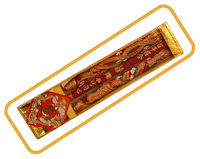


Always worship our ancestors first before the our family gods.

To order
contact Winnie 6012-302 1293
or email to
cadeausouvenirs@gmail.com
Setup in front of your house on your wedding day.

Items needed.

Always worship our ancestors first before the our family gods.

To order
contact Winnie 6012-302 1293
or email to
cadeausouvenirs@gmail.com
Sunday, April 5, 2009
DESCENDANTS SETS
CHI SHUEN TONG ~~~ "Bucket of Off-Spring"
A Traditional set are made of metal.
+Metal.jpg)
Plastic ~~~ consists of Baby Bathtubs, Potty, Face Washbasin, Mug, Tray.
+Plastic)
+Plastic)


Inside the Potty ~ sweet, red packet and 2 oranges seal with a piece of red paper. A young boy will be invlited to break the paper and take the sweet and red packet ~~ oranges for the newlywed.

Modern ~~ Son and Grandson Barrel.
The set consists of three parts -
a Basin ~ affluence, a Close Stool ~ children and greater happiness and a Bucket ~ diligence and aspiration.

+with+Deck.jpg)
+Modern)
To order
contact Winnie 012-302 1293
or email to
cadeausouvenirs@gmail.com
A Traditional set are made of metal.
+Metal.jpg)
Plastic ~~~ consists of Baby Bathtubs, Potty, Face Washbasin, Mug, Tray.

Inside the Potty ~ sweet, red packet and 2 oranges seal with a piece of red paper. A young boy will be invlited to break the paper and take the sweet and red packet ~~ oranges for the newlywed.

Modern ~~ Son and Grandson Barrel.
The set consists of three parts -
a Basin ~ affluence, a Close Stool ~ children and greater happiness and a Bucket ~ diligence and aspiration.

+with+Deck.jpg)
To order
contact Winnie 012-302 1293
or email to
cadeausouvenirs@gmail.com
Friday, January 9, 2009


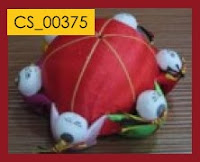


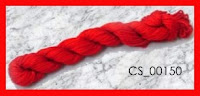


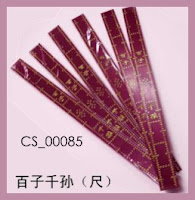
ORGANZA BOW

Depend on the width of your door
Range from RM 180 onwards
TO ORDER
contact Winnie 012-302 1293
Friday, January 2, 2009
Welcome!!!
Welcome!!
to Cadeau Souvenirs blogspots
We are now doing an online business.
We also provide services such as events organiser, consultation on chinese traditional weddings and elderly birthdays.
For further enquiries or purchasing of products, please contact us at 012-3021293 (Winnie) or drop us an email cadeausouvenirs@gmail.com
to Cadeau Souvenirs blogspots
We are now doing an online business.
We also provide services such as events organiser, consultation on chinese traditional weddings and elderly birthdays.
For further enquiries or purchasing of products, please contact us at 012-3021293 (Winnie) or drop us an email cadeausouvenirs@gmail.com
Subscribe to:
Posts (Atom)